Bookkeeping Preparation: A Practical Setup Checklist for Malaysian SMEs
2026-11-23 · Adsinar Platform Admin
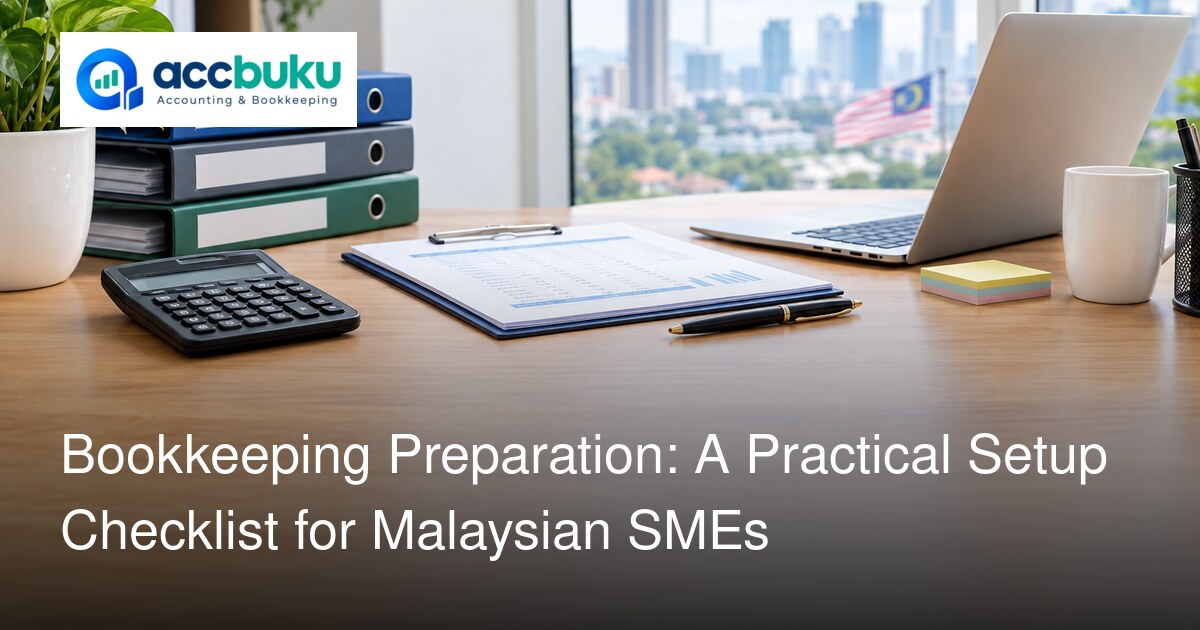
Many Malaysian business owners start bookkeeping only when tax season or a bank loan application forces them to. By then, receipts are missing, bank statements are mixed with personal spending, and nobody remembers who still owes money. Good bookkeeping starts before you record the first transaction. This guide walks through the preparation steps that make everything afterwards easier.
Why Bookkeeping Preparation Matters
Preparation saves time and reduces errors. A well-prepared set of books helps you:
- See your real profit and cash position at any time
- Prepare accounts for your accountant or tax agent without a last-minute scramble
- Chase overdue customers with accurate statements of account
- Stay ready for LHDN requirements, including e-Invoicing through MyInvois
- Give banks and investors clean financial reports when you need funding
Step 1: Separate Business and Personal Money
This is the most important step. Open a dedicated business bank account, whether you are a sole proprietor, partnership or Sdn Bhd. Every sale, expense and payment should go through it.
Mixing personal and business transactions makes bank reconciliation painful and can create problems when your accountant tries to work out what is a legitimate business expense. If you must pay for something personally on behalf of the business, record it clearly as a director's or owner's claim.
Step 2: Confirm Your Business Structure and Registrations
Your structure affects how you keep records and what you report. Check the following:
- SSM registration: confirm your business or company details are current
- Tax registration with LHDN: know which tax file your business falls under
- SST: if your business is registered for Sales or Service Tax, your records need to track taxable sales and tax charged correctly
- Financial year-end: note it down, especially for companies, as this sets your reporting cycle
If you are unsure about any of these, ask your accountant or tax agent before you begin.
Step 3: Choose Your Accounting Method
Decide whether you will record income and expenses when the invoice is issued (accrual basis) or when cash changes hands (cash basis). Most businesses that issue invoices on credit terms are better served by the accrual method, because it shows what customers owe you and what you owe suppliers. Your accountant can advise on the most suitable approach for your business.
Step 4: Set Up Your Chart of Accounts
The chart of accounts is the list of categories your transactions are sorted into. Keep it simple and relevant:
- Assets: bank, cash, accounts receivable, stock, equipment
- Liabilities: accounts payable, loans, tax payable
- Equity: capital, retained earnings, owner's drawings
- Income: product sales, service income, other income
- Expenses: rent, salaries, utilities, marketing, transport, professional fees
Avoid creating too many accounts at the start. You can always add more later, but a cluttered list leads to inconsistent categorising.
Step 5: Gather Your Opening Balances
If your business is already running, you need a starting point. Collect:
- Bank balances as at your start date
- A list of unpaid customer invoices (receivables)
- A list of unpaid supplier bills (payables)
- Stock on hand, if you sell goods
- Fixed assets, loans and owner's capital
Your previous accountant or the last set of financial statements is the best source. Entering accurate opening balances means your reports are correct from day one.
Step 6: Organise Your Customer, Supplier and Stock Lists
Before transacting, prepare clean master data:
- Customers: full legal name, address, contact details, and tax information where relevant
- Suppliers: name, contact, payment terms
- Products and services: item names, codes, prices, and stock quantities
Accurate details matter more now than before, because e-Invoice submissions rely on correct buyer and seller information.
Step 7: Get e-Invoice Ready
Malaysia's e-Invoicing system, MyInvois, is being rolled out in phases by LHDN. Even if your business is not yet required to comply, it is wise to prepare:
- Check LHDN's official guidelines to find out when your business is expected to start
- Make sure your business details, including your Tax Identification Number (TIN), are accurate
- Collect correct TIN and registration details from your regular customers
- Choose a system that can generate invoices in the required format and submit them to MyInvois
Building this into your process now is much easier than fixing it later.
Step 8: Create a Document Collection System
Bookkeeping is only as good as the documents behind it. Decide how you will capture:
- Sales invoices, receipts and credit notes
- Supplier bills and expense receipts
- Bank statements
- Payroll records and statutory payment slips
- Contracts and agreements
Snap photos of receipts, store them digitally, and name or tag them consistently. LHDN generally expects businesses to keep records for seven years, so a reliable digital archive is far safer than a drawer full of fading thermal receipts.
Step 9: Set a Bookkeeping Routine
Consistency beats intensity. A simple routine might look like this:
- Daily: record sales and issue invoices promptly
- Weekly: enter supplier bills and expenses, follow up on unpaid invoices
- Monthly: reconcile your bank account, review profit and loss, send statements of account to customers
- Quarterly or annually: share reports with your accountant and review your chart of accounts
Block the time in your calendar, or assign it clearly to a staff member.
Quick Bookkeeping Preparation Checklist
- Business bank account opened and in use
- SSM, LHDN and SST details confirmed
- Accounting method and financial year-end decided
- Chart of accounts set up
- Opening balances collected
- Customer, supplier and product lists ready
- e-Invoice requirements checked
- Document filing system in place
- Regular bookkeeping schedule agreed
Let Software Do the Heavy Lifting
Spreadsheets can work at the very beginning, but they struggle with e-Invoicing, bank reconciliation, stock tracking and reporting as you grow. A cloud accounting system keeps everything in one place and lets your accountant access the same up-to-date records.
Ready to start with clean books? Try accbuku.my to create invoices, prepare for e-Invoice with LHDN MyInvois, reconcile bank accounts, manage stock and generate financial reports, all in one Malaysian cloud accounting platform.
Do your books online with accbuku
Invoices, e-Invoice, SOA, bank and reports — free to start.
Start free